Deep Link Setup
We support two ways to open the mobile app from shared links:
- Method A: Custom Scheme Deep Links — Share links route through the website, which triggers a custom scheme to launch the app.
- Method B: Direct HTTPS Deep Links — Share links use standard https URLs (Android App Links / iOS Universal Links) to open the app directly.
Use Method A if you want the website to mediate opening and provide flexible fallbacks. Use Method B for a direct, system-level experience with better reliability on modern platforms.
Method A: Custom Scheme via Website
This approach uses a custom scheme like eclassify:// to open the app. Share links point to your website (e.g., https://example.com/item/123), and the website attempts to open the app using the custom scheme. If the app is not installed, the website continues as a normal web page.
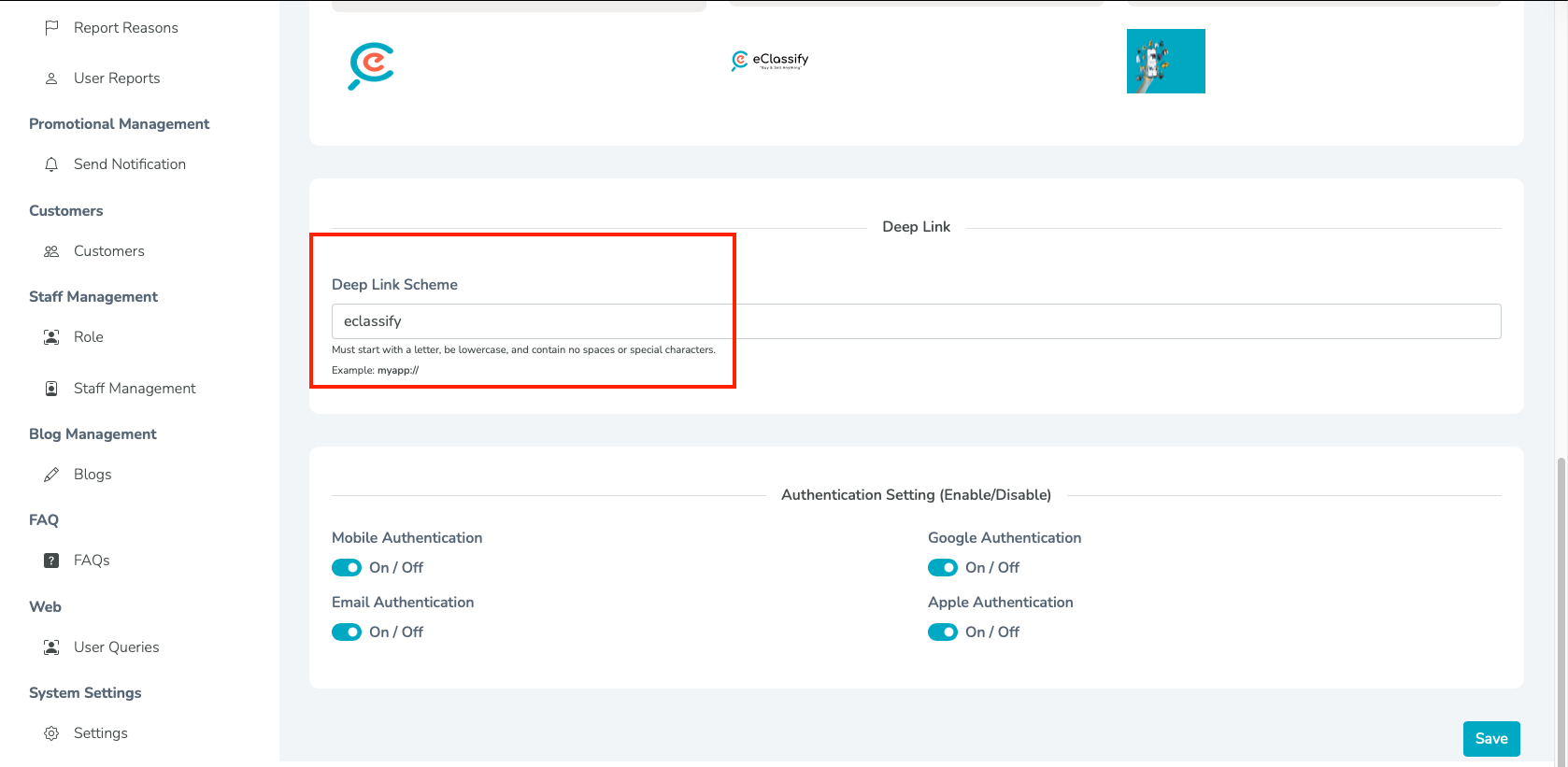
Admin Panel Configuration
- Go to Settings → Deep Link Scheme and enter your scheme name (e.g.,
eclassify). Do not includehttporhttps.
iOS App Setup (Custom Scheme)
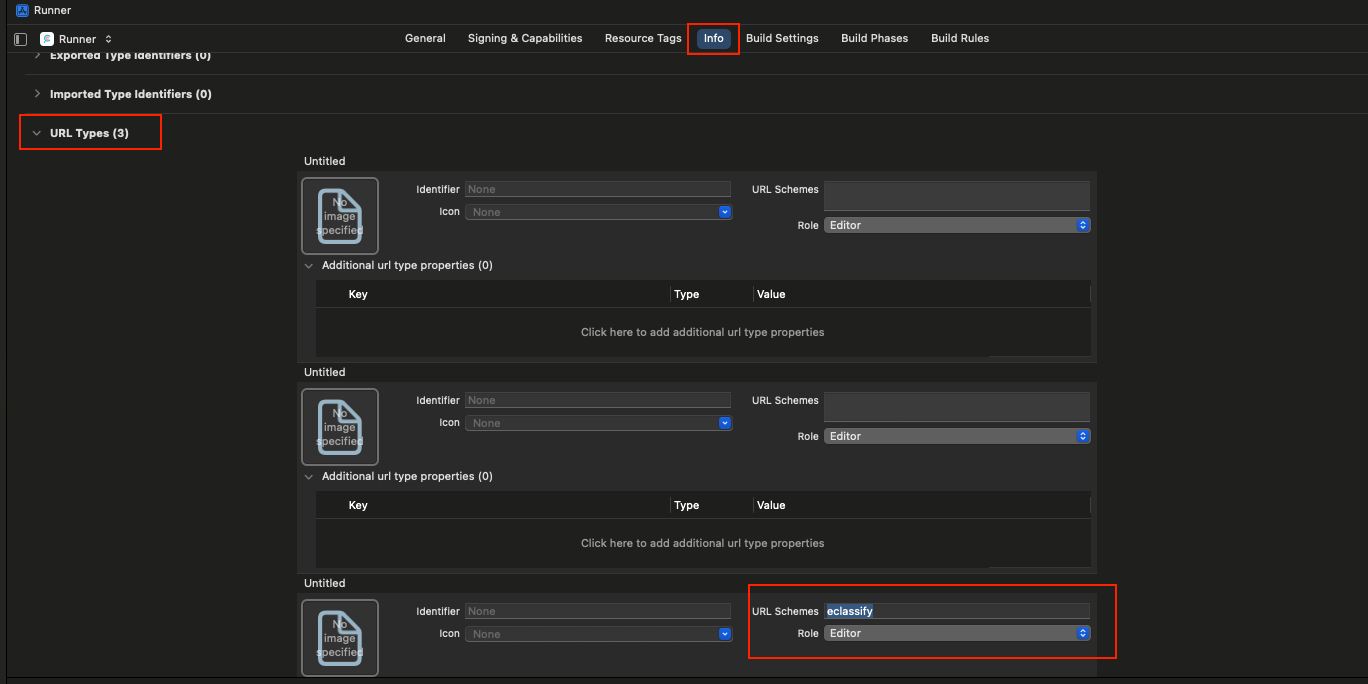
- Xcode → Info → URL Types → add a URL Scheme matching the admin scheme.
Android App Setup (Custom Scheme)
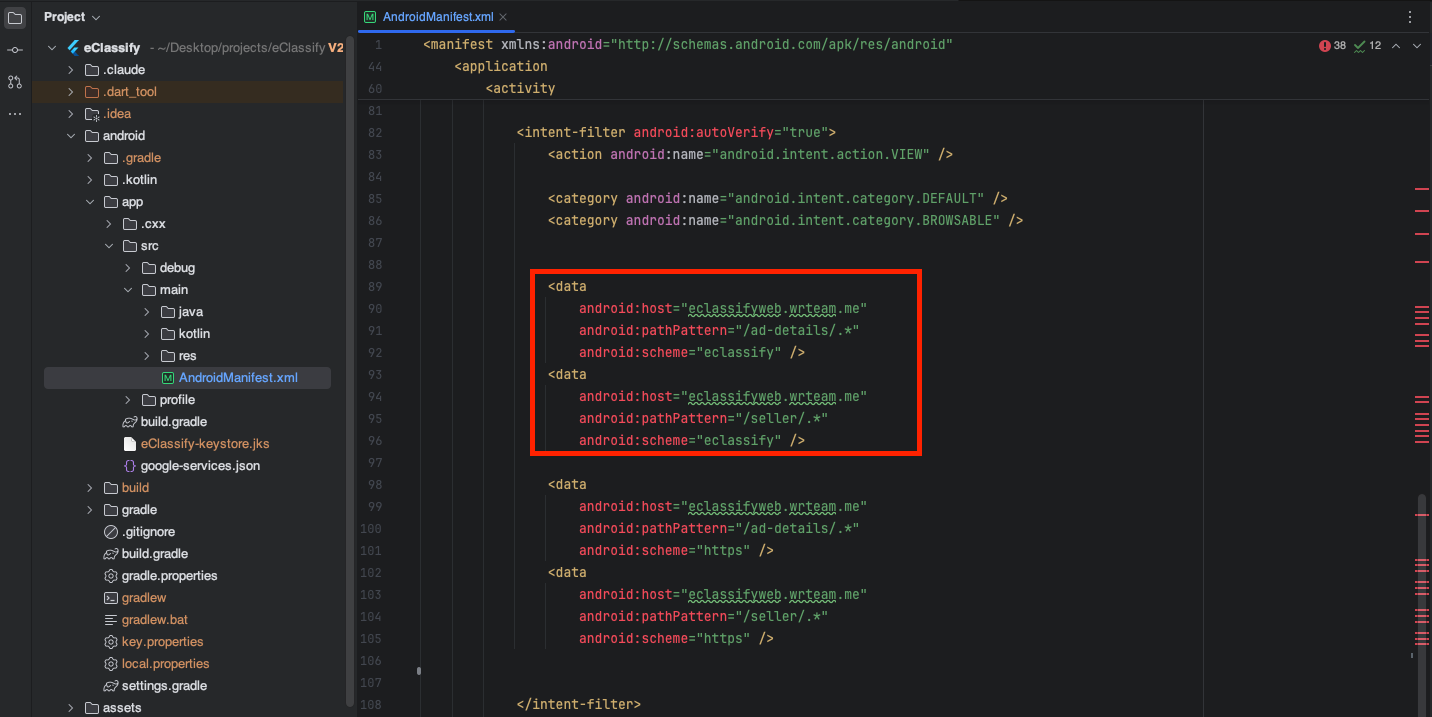
- Update your custom scheme and host in the intent filter inside
AndroidManifest.xml.
App Config Host
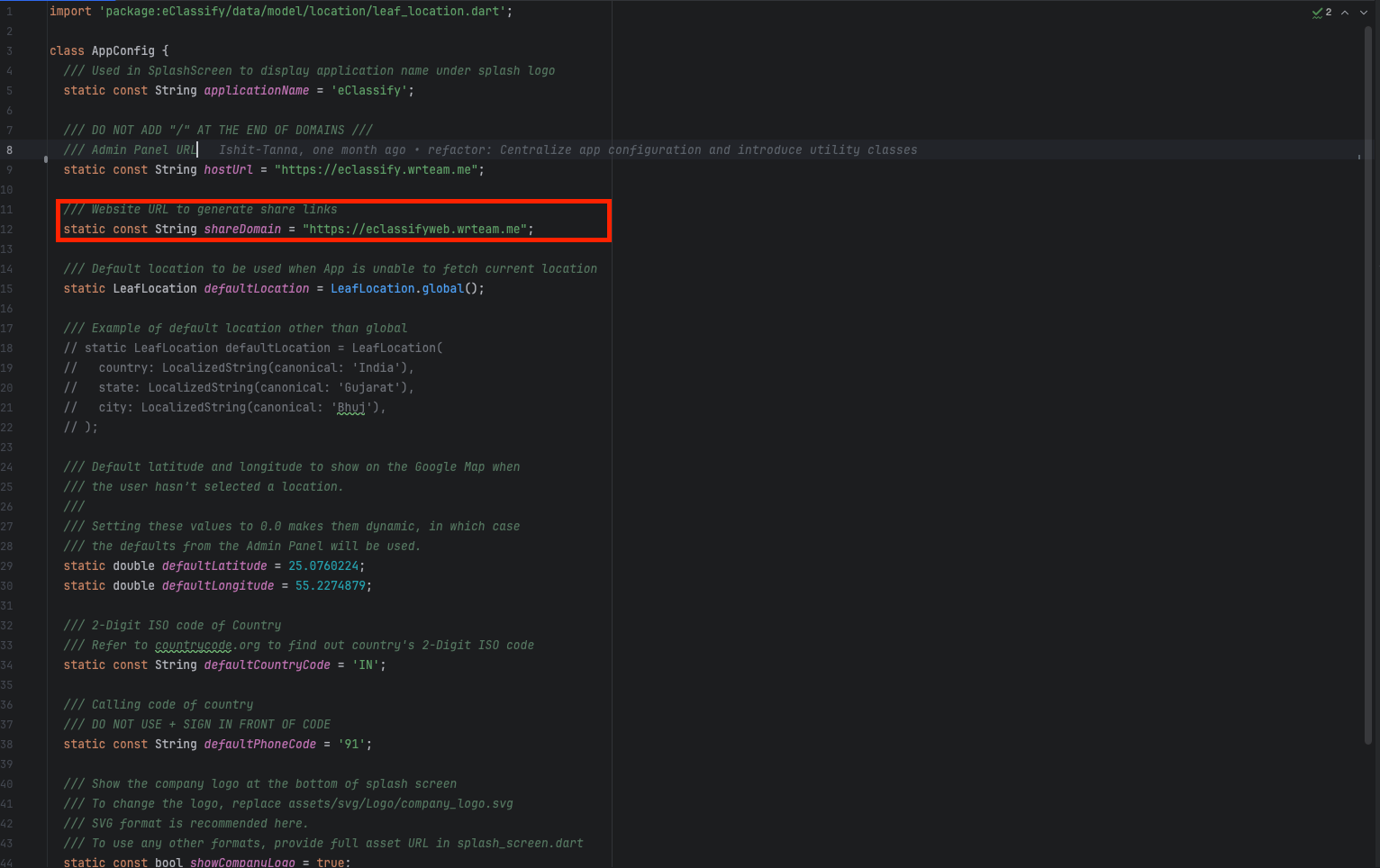
- In
lib/app_config.dart, set your website domain:
Method B: Direct HTTPS Deep Links
This approach uses your https domain to open the app directly via:
- Android App Links (requires
assetlinks.json) - iOS Universal Links (requires
apple-app-site-associationAASA file)
Share links like https://example.com/item/123 open the app if installed; otherwise they open the website.
Android Setup (App Links)
-
Generate
assetlinks.json:- Visit Play Console
- Select your app
- Scroll down to find the Digital Asset Links JSON content for your app
- Create a new file named
assetlinks.jsonwith the content from Play Console.
-
Host
assetlinks.jsonat:
https://<your-domain>/.well-known/assetlinks.json
- The
assetlinks.jsonfile must be hosted at the root of your domain. - Ensure the file is publicly accessible over HTTPS.
- Test the file by visiting
https://<your-domain>/.well-known/assetlinks.jsonin a browser. It should display the JSON content.
iOS Setup (Universal Links)
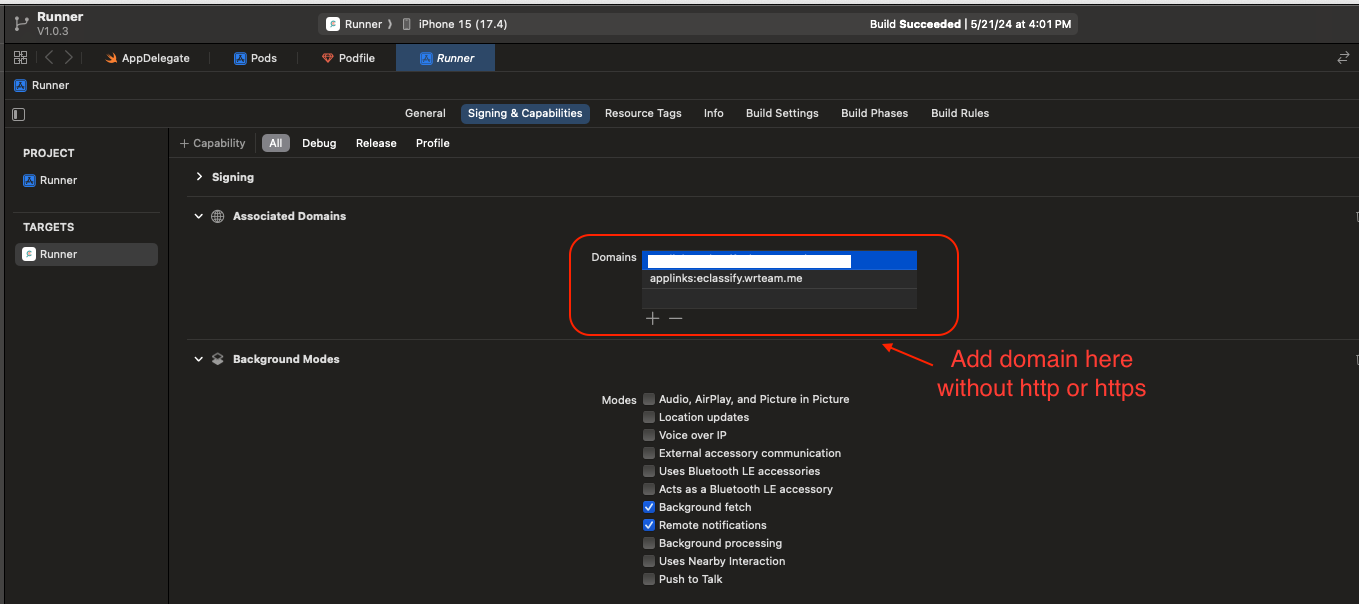
- Xcode → Runner → Signing & Capabilities → Associated Domains → add:
applinks:<your-domain>
-
Host the AASA file at one of:
https://<your-domain>/.well-known/apple-app-site-associationhttps://<your-domain>/apple-app-site-association
-
Generate AASA with your Team ID and bundle ID:
- You can find your Team ID in the Apple Developer account.
- Your bundle ID is in Xcode → Runner → General → Identity → Bundle Identifier.
The "apple-app-site-association" file must not have any extensions.
Example file:
- Replace the
TEAMIDwith your actual Team ID. - Replace
com.yourcompany.eclassifywith your actual bundle ID. - Keep the rest of the file structure as is including components
{
  "applinks": {
    "apps": [],
    "details": [
      {
        "appIDs": ["TEAMID.com.yourcompany.eclassify"],
        "components": [
          {
            "/ad-details/*",
            "/seller/*"
          }
        ]
      }
    ]
  }
}
Verification and Testing
- Android: Open a share URL like
https://example.com/item/123. If the app opens, App Links are working. You can also test via Android Studio App Links Assistant oradbverifier. - iOS: Tap the same
httpslink in Safari or Messages. If the app opens, Universal Links are working. If it opens the website, check AASA hosting and Associated Domains.
Choosing the Right Method
- Prefer Method B (HTTPS) for seamless, system-level behavior and stronger reliability.
- Use Method A (Custom Scheme) when you need website-first control or if you cannot host assetlinks/AASA yet.
- For best UX, you can support both: HTTPS deep links as primary, custom scheme as fallback from specific web flows.
Method B (HTTPS Deep Links) only works with the apps installed via Play Store or App Store.